



.png)
Sara Mo Vanacht
July 10, 2026
Why Generic AI Translation Fails Enterprise Marketing
Leading teams go beyond generic translation tools that strip their brand voice, choosing purpose-built systems that enforce brand voice and quality at scale.
Your brand took years to build. But in global marketing, it can start to drift in a single translation workflow.
The challenge for enterprise teams isn’t whether they can translate content. There are plenty of tools to do that. It’s whether they can localize content across enough markets, fast enough to support the business, without sacrificing their brand in the process.
That’s no small task. But it is increasingly the reality of global marketing, and with the right system, it’s possible to do at scale.
One Jasper beta customer used Translation Agent to translate 65,000 pieces of content across 1,200 products and 20 languages in a single run, with a 99.7% success rate. That’s the volume and speed modern marketing organizations are being asked to support.
And the business case for doing that work is clear. CSA Research’s landmark Can’t Read, Won’t Buy study found that 76% of buyers prefer to buy products with information in their native language, and 40% won’t buy from websites in other languages.
In other words: Translating content for global markets in a way that maintains your brand’s authenticity is no longer optional. And that’s where generic AI translation tools start to break down.
The Hidden Cost of Brand Drift
Brand drift is what happens when translated content technically says the right thing but stops sounding like you. When you're localizing content constantly across campaigns and regions, your voice can erode gradually, and without attention.
Consider what a generic AI translation tool strips out on every pass:
- Brand voice. The register, rhythm, and personality that make your content recognizable get replaced with neutral, machine-standard phrasing.
- Terminology. Your product names, feature labels, and industry terms get translated literally, even when they should stay fixed or follow a specific convention.
- Tone. A confident campaign headline can land as flat or overly formal in the target language, changing how buyers perceive you.
Now multiply that across every asset, every language, and every campaign. A single off-brand product page is a minor issue. Two hundred assets localized into five languages, each drifting in a slightly different direction, is a brand consistency problem you’ll eventually have to answer for.
The financial angle matters too. Off-brand translations trigger rework, extend review cycles, and pull agency budget toward cleanup instead of strategy. What looks like a fast and cheap translation upfront becomes an expensive quality-control burden downstream.
And that’s what makes this problem so difficult for enterprise teams. The answer isn’t to abandon AI translation and send every asset through a fully manual review process. At the scale modern global marketing demands, that’s not realistic either.
The real challenge is localizing high-volume content across markets without turning brand review into a bottleneck or letting brand drift compound.
Generic translation optimizes for linguistic accuracy. But enterprise marketing also needs brand accuracy, authenticity, and a way to maintain both at scale.
The Missing Link for Generic AI Translation Tools
DeepL and Google Translate are strong at what they were built to do. They produce fast, fluent, accurate translations. For a quick email or an internal doc, they work fine.
The trouble starts when you ask them to support the kind of high-volume localization that enterprise teams now need. Generic tools convert language quickly. But they weren’t built to operationalize brand-safe translation across campaigns, products, regions, and teams at scale.
Ask yourself these questions about your current tool:
- Can it load your brand glossary and enforce it across every output? Generic tools have no concept of your terminology. Each translation is a fresh guess.
- Does it know your tone of voice? There is no brand layer to draw from, so the output defaults to a generic register.
- Does anything check whether the result sounds native or just translated? Fluent is not the same as natural. Generic tools cannot tell the difference, so neither can you until it ships.
This is the core limitation. Generic AI translators have no memory of who you are, no enforcement of what you’ve defined, and no editorial standard for staying brand-aligned. For enterprise marketing, it’s hard to govern and even harder to trust at scale.
Translate the Way a Professional Would
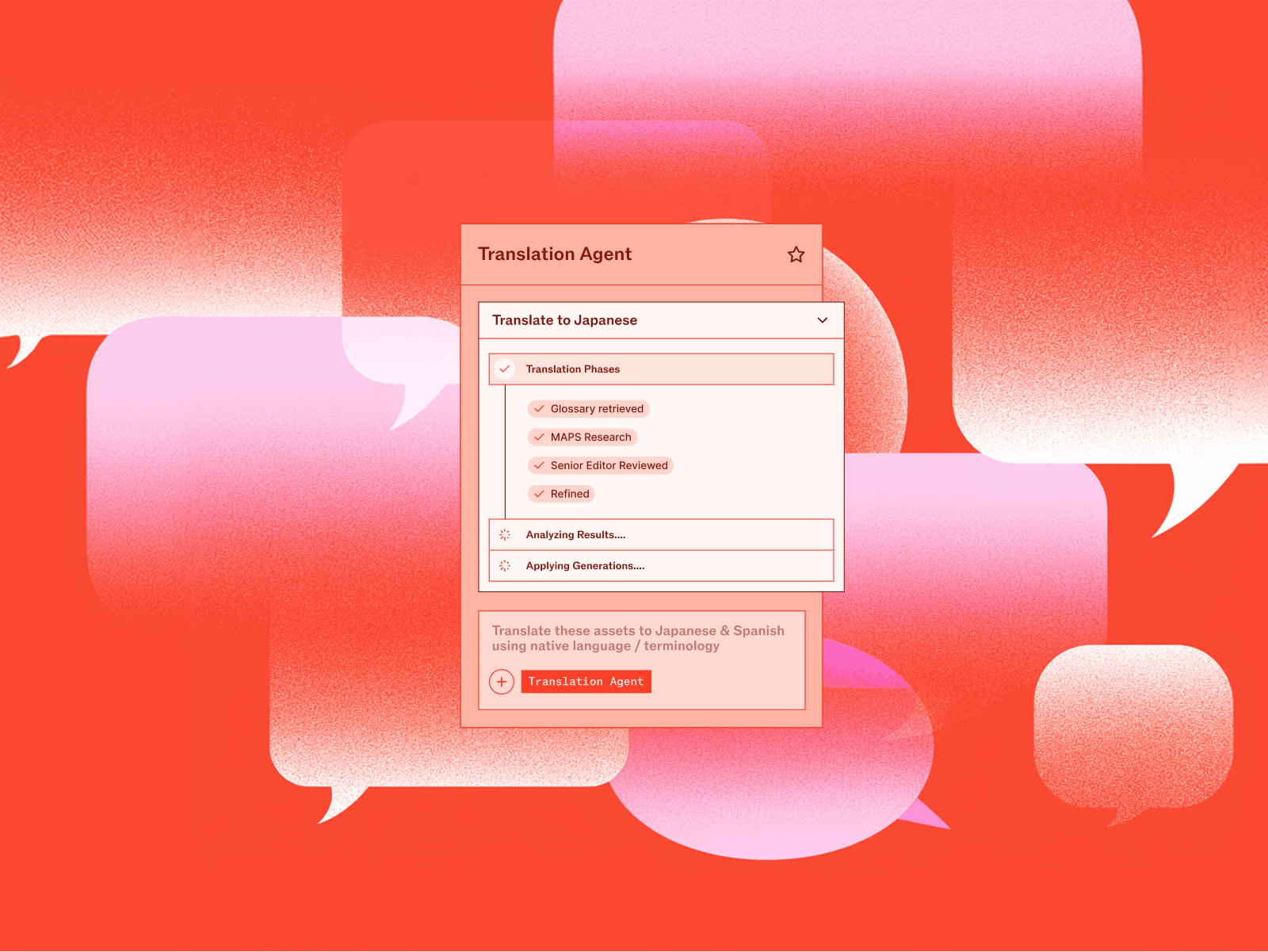
What enterprise marketers need is an end-to-end translation system that preserves brand voice and terminology at scale. Jasper’s Translation Agent is designed for that job. It translates content into 27 languages, with brand voice and glossary enforcement built into the process.
Rather than relying on a single translation pass, it runs a multi-phase workflow designed to keep content natural, brand-aligned, and ready to use, so the final output reads as if it was originally written just for that market.
<div style="position: relative; padding-bottom: 100%; height: 0;"><iframe src="https://www.loom.com/embed/1fc866cd0efc4d52aafec10a4c3b61a8?autoplay=1&loop=1" frameborder="0" webkitallowfullscreen mozallowfullscreen allowfullscreen style="position: absolute; top: 0; left: 0; width: 100%; height: 100%;"></iframe></div>
Phase 1: Content Analysis
Before a single word is translated, the Translation Agent reads the instructions and identifies content type, tone, audience, and any dialect preferences. It understands what it's working with first.
Phase 2: Brand Glossary Loading
The agent loads your brand glossary from the Jasper Knowledge Base. Your product names, industry terms, and required conventions come into the process as rules, not suggestions.
Phase 3: Native-Language Style Anchors
This is the step generic tools skip entirely. The agent generates native-language writing samples, real examples of how this type of content sounds when written natively in the target language. These anchor the translation in how people actually write in that language.
Phase 4: Holistic Translation
Using those style anchors, the agent produces a full translation. The glossary acts as a guide here to keep the output natural rather than stiff and over-literal.
Phase 5: Native Editorial Review
A native editor persona reads the translation without seeing the source text. Its only job is to flag anything that sounds translated rather than written. Glossary compliance gets verified. If any issues surface, a refinement pass applies the feedback and enforces every glossary term.
What sets Jasper apart
Once you strip away the marketing language, a few things genuinely separate this approach from a generic language tool. Here's what matters most when you're weighing the two.
Your glossary, enforced across 27 languages
Brand terminology loads automatically from the Knowledge Base and holds through every phase. You are not manually checking every output for the right product name. The system does it for you, at scale, in every language.
Brand voice through Jasper IQ
The same intelligence that governs your English content governs every language. Through Jasper IQ, your brand voice shapes the tone and register of the translation, so consistency is built in rather than bolted on after the fact.
A dedicated editorial review phase
No generic tool has a native-speaker review step. This is the difference between "close enough" and content that reads like it was written in-market. It is quality control that runs automatically, not a manual pass you have to staff.
Built into the workflow
The agent lives where your team already works. Use Jasper Canvas for document-level translation. Attach a file, select the Translation Agent, prompt with a target language, and the translated content appears in your workspace.
Use Jasper Grid for scale. Add a Translation Agent column to any Grid and it translates every row automatically. A hundred assets into five languages becomes five columns and one run. No external tool, no copy-paste, no context switching.
Where This Fits With Your Existing Team
You might wonder whether this replaces your agency or internal translation team. It does not. It changes what they focus on.
Agencies are built for high-stakes, one-off projects. An internal team brings judgment no tool can match. The Translation Agent handles the volume, the campaign emails, product pages, and sales decks, so your human experts can refocus on strategy execution.
Think of it as a force multiplier. Your team stops managing one-by-one translation sessions and starts governing a full-scale system. That shift is where the real efficiency, and the real ROI, lives.
The Bottom Line
Generic AI translation is fast and fluent, but it translates language, not brand. At enterprise scale, that gap becomes brand drift, and brand drift compounds across every market, asset, and campaign you launch.
The fix is a purpose-built translation system that enforces your glossary, preserves your brand voice, and adds editorial safeguards before content goes live. That’s how global teams scale localization without sacrificing consistency, credibility, or the qualities that make the brand recognizable and memorable.
Learn more about the Jasper Translation Agent.

More of the latest & greatest
Optimizing Product Content for AI Search Engine Recommendations
Discover how to build product content that AI shopping engines can accurately understand and consistently recommend.
October 8, 2026
|
Mason Johnson

How to Measure AI Referral Traffic and Find Competitive Visibility Gaps
Discover how to connect AI referral traffic with competitive share of voice, prompt-level gaps, and a prioritized GEO optimization roadmap.
October 8, 2026
|
Kurt Lambert
How to Monitor and Prevent AI Hallucinations About Your Brand
A practical framework for auditing, correcting, and monitoring how AI engines describe your brand.
October 8, 2026
|
Kurt Lambert