






.png)
report
The State of AI in Marketing 2026
The experiment is over and the operational era has begun. Here are the benchmarks, hard truths, and signals defining the next era of AI in marketing.
Get the full report


000

About the research
To understand what real AI maturity looks like, Jasper surveyed 1,400 marketers across industries, company sizes, and seniority levels. If last year was about adopting AI, then this year is all about operationalizing it.
Our 2nd annual State of AI in Marketing report goes beyond surface-level adoption to examine how AI is actually being embedded into marketing, from content production
and governance to measurement, roles, and organizational design.

001
AI is everywhere.And it's working.
AI in marketing is no longer optional. It’s fully embedded in how work gets done.
This year, 91% of marketers report actively using AI in their work, up from 63% last year. As AI becomes part of daily workflows, teams are seeing real productivity gains.


are bringing work to market faster.
of AI users report higher job satisfaction.

have lowered operating costs.
002
The ROI is real. But proving it now is harder.
As AI moves from experimentation into core marketing operations, expectations have fundamentally changed.
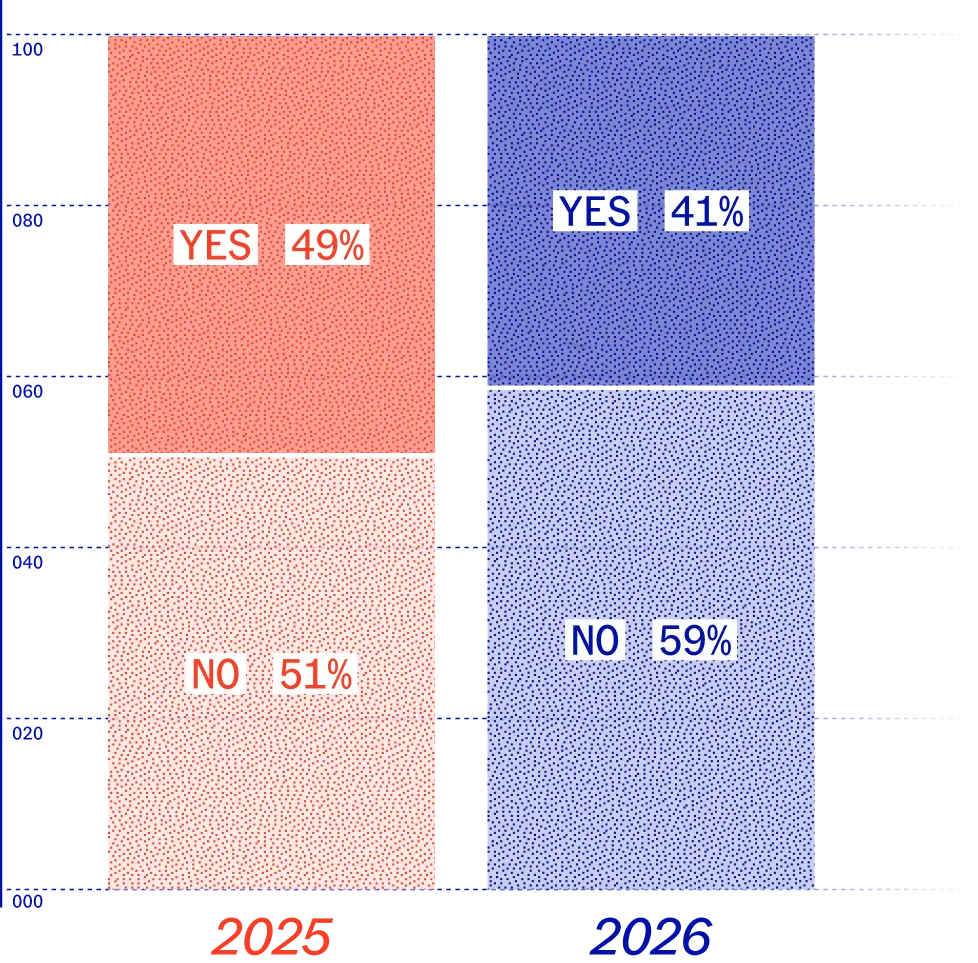
Last year, 49% of marketers said they could prove AI ROI. Today, only 41% can—not because AI is delivering less value, but because productivity gains alone are no longer sufficient. Leadership now expects AI investments to show up in measurable business outcomes.
For teams that have adapted their measurement approach, the results are clear: 60% report returns of 2–3× or higher.

“Can you measure the ROI of your AI investments?”


003
Scale is where pressurereally shows up.
Last year, concerns centered on budgets, AI skills, and leadership commitment. In 2026, the biggest constraints now sit inside the operating model.
The top scaling challenges include:




004
Marketing teams are evolving for the AI era.
As AI shifts from optional to mandatory, marketing roles and structures are changing. 65% of marketing teams now have designated AI roles, often focused on AI operations, workflows, or strategy.


1/3
marketers have added AI strategy, policies, and governance to their existing roles.


005
What best-in-classlooks like
The most advanced marketing organizations are way beyond piloting, and are operationalizing AI at scale. We found that the most advanced marketing organizations share 6 defining traits that set them apart, including:

Demographics
Who we surveyed