




.png)
Mason Johnson
July 23, 2026
How to Earn Citations Across Off-Domain AI Search Sources
Learn how to earn citations across the publications, communities, review platforms, and other third-party sources shaping AI search results.
Last updated: October 8, 2026
When AI search engines answer a question about your category, where do they point?
It’s almost never to your own website.
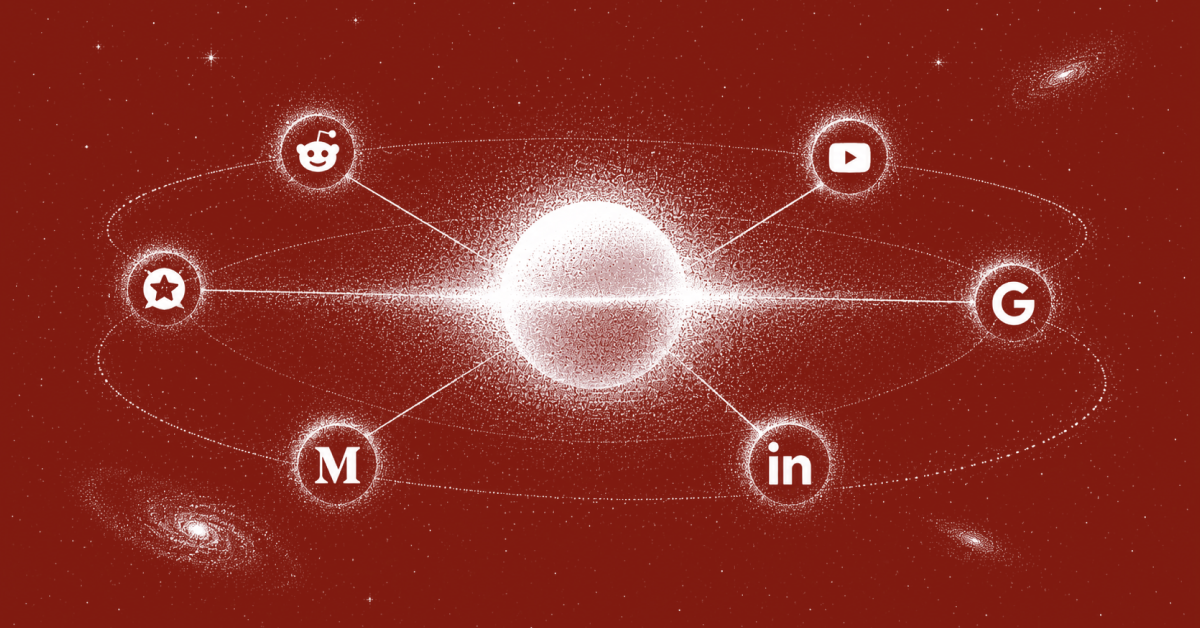
AI-generated answers draw from news articles, industry publications, analyst research, comparison sites, customer reviews, creator and community platforms, partner content, and other sources distributed across the web.
These off-domain sources have significant influence over how brands appear in AI search. A 2026 Muck Rack study analyzing more than 25 million links cited by ChatGPT, Claude, and Gemini found that earned media accounted for 84% of AI citations.
That changes the nature of brand visibility. Marketing teams can publish accurate, comprehensive content on their own sites and still leave much of their AI search presence in the hands of online surfaces they don’t control.
Brands can’t directly create most of those third-party signals. But they can earn them by giving those sources evidence and expertise worth citing.
Key Takeaways
- Off-domain citations help brands build visibility in AI-generated answers through third-party sources.
- Original research and expert insights give external sources valuable information to reference.
- Prioritize publications and platforms that AI engines already cite for relevant queries.
- Earned media, customer reviews, and community participation create different opportunities for visibility.
- Jasper GEO Hub and GEO Agent help identify citation gaps and prioritize opportunities to improve AI search visibility.
How do off-domain sources impact AI search?
AEO and GEO operate across an ecosystem of owned and third-party sources. Your website gives AI engines direct information about your brand, products, and expertise. Off-domain sources provide external signals that can validate, expand, challenge, or reshape that information.
Those sources don’t all establish authority in the same way. A trade publication may contribute independent editorial credibility. A review platform captures verified customer experiences. A YouTube demo shows how a product works. A Reddit thread surfaces first-hand opinions and candid category conversations.
Each source also has different standards for what it will publish, reference, or discuss. Earning citations in this kind of ecosystem requires understanding what each platform values, then publishing content it will want to use. Here’s a quick snapshot:
The right mix of off-domain sources will look different for every brand. Teams should prioritize the surfaces with the greatest influence over their most important queries, then focus their efforts on earning citations where they can materially improve visibility.
How do you operationalize off-domain citation opportunities?
Earning an off-domain citation starts with content actually worth citing: original evidence, expertise, and a clear point of view. Our guide to creating non-commodity content for AI search breaks down how to build that into your production process.
The next move is turning that content into citation opportunities across the surfaces already shaping brand-relevant AI answers. The same underlying evidence can support several off-domain opportunities when it is adapted for each audience.
Proprietary research, for example, might inform a journalist’s trend coverage, strengthen an analyst briefing, give an executive a substantive point to discuss on a podcast. A customer outcome could support a partner story, an industry award submission, a review program, or contributed editorial coverage.
In each case, the evidence remains consistent while its presentation and activation reflect the needs of the source.
Operationalizing that means:
- Pinpointing where your brand needs stronger visibility in AI-generated answers
- Finding the sources already shaping those answers
- Matching the strongest available evidence and content to the opportunity
- Shaping it into the format each source actually uses
- Routing it through the team that owns that channel
- Tracking what gets picked up and feeding it into the next round
This process discipline is what makes off-domain content value compound. Every citation earned becomes evidence for what to try next, and the following push starts smarter than the last.
Build a repeatable citation strategy with Jasper GEO
Earning off-domain citations starts with understanding the sources shaping AI search answers, where your brand is missing or misrepresented, and which opportunities could meaningfully improve its visibility.
Jasper’s GEO Hub and GEO Agent deliver the end-to-end visibility and insights teams need to analyze performance in real time and take targeted action.
GEO Hub shows how your brand performs across AI search platforms and which sources influence individual queries, helping teams determine what evidence and expertise could strengthen its presence across the off-domain ecosystem.
GEO Agent then translates those findings into action by identifying coverage gaps and developing optimized content to address them—continuously and at scale. The result is a direct path and always-on system connecting citation intelligence with action that improves AI search performance.
Learn more about how Jasper GEO Hub and GEO Agent can help you own your brand’s AI search performance.
Frequently Asked Questions
What are off-domain citations in AI search?
Off-domain citations in AI search are references to third-party websites and content that AI engines use when generating answers. These sources can include industry publications, review platforms, research organizations, and online communities. Off-domain citations influence how AI systems describe brands and which sources they reference when answering relevant questions.
How do you earn off-domain citations in AI search?
To earn off-domain citations in AI search, identify the third-party sources AI engines already reference for relevant queries. Develop original research, expert commentary, or customer evidence those sources can use, then pursue coverage through media outreach, partnerships, and other relevant channels. Track which sources cite your brand and appear in AI-generated answers.
Which third-party sources are most important for AI search citations?
The most important third-party sources for AI search citations depend on the industry and the questions users ask. Common sources include news publications, analyst research, review platforms, and professional communities. Brands should prioritize the sources AI engines consistently reference for their most relevant topics and category queries.
How can brands identify off-domain citation opportunities?
Brands can identify off-domain citation opportunities by analyzing AI-generated answers for important industry queries and reviewing which third-party sources receive citations. Look for publications citing competitors, relevant topics where the brand is missing, and sources that could benefit from original research or expert perspectives. Jasper GEO Hub and GEO Agent help teams identify and prioritize these visibility gaps.
How do off-domain citations improve brand visibility in AI search?
Off-domain citations can improve brand visibility in AI search by increasing the availability of independent information about a brand across sources AI engines may reference. Third-party coverage can support brand recognition and provide evidence for AI-generated answers. However, appearing on a third-party website does not guarantee that an AI engine will cite it.
How do you measure the impact of off-domain citations on AI search visibility?
To measure the impact of off-domain citations on AI search visibility, track how often third-party sources mentioning your brand appear in AI-generated answers. Monitor brand mentions, citation frequency, competitive share of voice, and changes across relevant queries over time. These metrics help determine which off-domain sources contribute to visibility and where additional outreach may be valuable.

More of the latest & greatest

Introducing Multiple Audiences: Write for the Whole Buying Committee
Craft content that resonates with multiple target audiences simultaneously with Jasper Multiple Audiences. Attach up to four audiences to one AI generation, so a single asset reaches the whole buying committee.
October 15, 2026
|
Mason Johnson

How to Audit and Analyze AI Crawler Traffic on Your Website
AI crawlers are changing how content gets discovered and surfaced in AI search. Understanding their behavior gives marketers greater visibility into how AI engines interact with their websites.
October 14, 2026
|
Kurt Lambert

Enterprise GEO Platforms: Evaluation Criteria for Marketing Teams
The right enterprise GEO platform connects AI search visibility insights to content optimization, with the measurement and governance capabilities needed to scale.
October 14, 2026
|
Mason Johnson